Pulse Metering Dashboard
Overview
The Pulse Metering Dashboard provides a clear, centralized view of resource consumption measured through pulse-enabled meters, such as water, gas, or other utility systems. By converting meter pulses into measurable usage data, the dashboard enables accurate monitoring of consumption, flow behavior, and associated costs over time.
By transforming pulse meter readings into actionable insights, the Pulse Metering Dashboard helps organizations improve cost control, resource efficiency, and operational transparency.
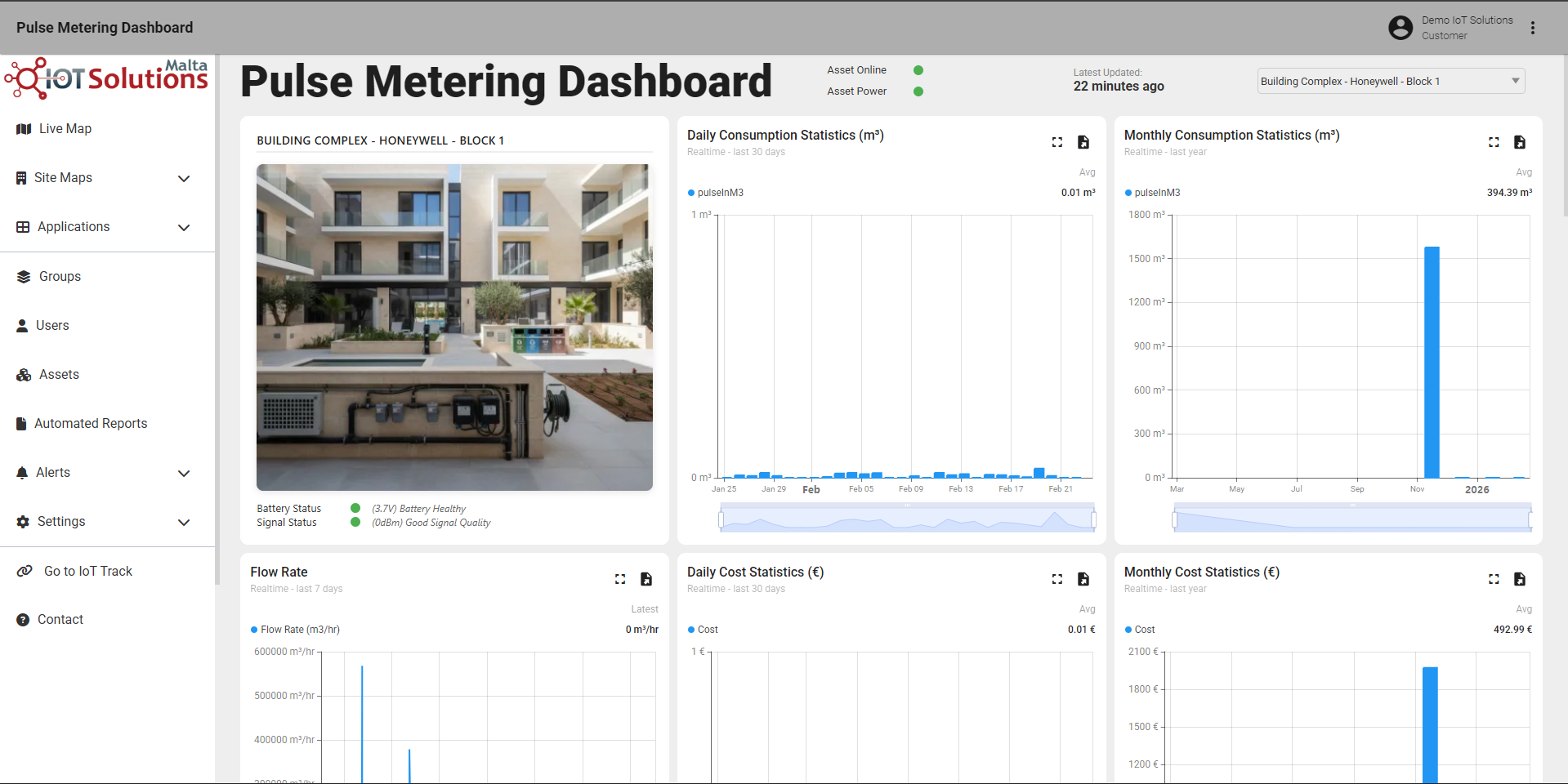
IoT Pro Platform - Pulse Metering Dashboard
Why this dashboard is useful
Accurate consumption tracking is essential for managing utilities, controlling expenses, and improving sustainability. This dashboard helps you:
Monitor real-time and historical resource usage
Understand consumption patterns and peak usage periods
Detect leaks, abnormal usage, or system inefficiencies
Track costs associated with resource consumption
Support billing accuracy and usage accountability
Improve conservation and sustainability efforts
How it helps you day to day
The dashboard supports operational decision-making by:
Showing daily and monthly consumption trends for better planning
Providing flow rate insights to detect sudden spikes or leaks
Converting usage into cost estimates for budget awareness
Highlighting unusual patterns that may indicate system issues
Supporting fair allocation and tenant billing where applicable
Helping reduce waste through better visibility of usage
This empowers facility managers, operators, and property owners to manage resources efficiently and respond quickly to unexpected changes.
Typical use cases
The Pulse Metering Dashboard is commonly used in environments where utility usage must be monitored and controlled, including:
Residential and commercial buildings for water or gas monitoring
Tenant sub-metering and usage-based billing systems
Industrial facilities tracking process water or fluid usage
Hotels, campuses, and multi-unit complexes for consumption accountability
Sustainability and conservation initiatives
Leak detection and preventative maintenance programs